Short answer
Ladakhi food is simple, warming and based on barley, wheat, vegetables and meat. Try thukpa, momos, skyu, tingmo, butter tea and local apricots. Leh has a wide range of restaurants, vegetarians eat well, and camps serve simple meals. Eat light, stay hydrated and avoid alcohol at altitude.
On this page 11 sections
Food in Ladakh is shaped by the climate: cold winters, a short growing season and a long tradition of storing and preserving. The result is simple, warming dishes based on barley, wheat, potatoes, root vegetables, dairy and meat. Leh also has a broad range of restaurants that cater to visitors, so you can eat very well. Beyond Leh, meals are plainer, and it helps to know what to expect.
Local dishes to try
- Thukpa. A noodle soup with vegetables or meat, found everywhere. It is comforting at altitude.
- Momos. Steamed or fried dumplings with vegetable, chicken or mutton filling, served with chilli sauce.
- Skyu. A traditional stew of hand-rolled pasta in a vegetable or meat broth, a Ladakhi classic.
- Chhutagi. A pasta dish similar to skyu, made with small shapes of dough in a thick soup.
- Tingmo. Steamed bread, soft and round, eaten with vegetable curry or dal.
- Thenthuk. Hand-pulled noodle soup.
- Paba. A thick porridge made from roasted barley and pea flour, a staple in villages.
- Khambir. A heavy local bread, often eaten with butter tea.
- Butter tea (gur gur chai). Tea churned with butter and salt, an acquired taste that is warming and nutritious.
- Chang. A barley beer made at home in some villages. Alcohol at altitude is risky, especially in your first days.
- Apricots and seabuckthorn. Dried apricots, apricot jam, juice and seabuckthorn tea or juice are local specialities and make good gifts.
Eating in Leh
Leh has Tibetan, Ladakhi, Indian and continental restaurants, rooftop cafes, bakeries serving cakes and apple pie, and German-style bakeries that have been popular for decades. Many restaurants cater to a range of tastes, including vegetarian, vegan and Jain options. Prices are higher than in the plains because supplies arrive by long roads. Quality varies, so look for places that are busy with locals as well as visitors.
Eating in camps and on the road
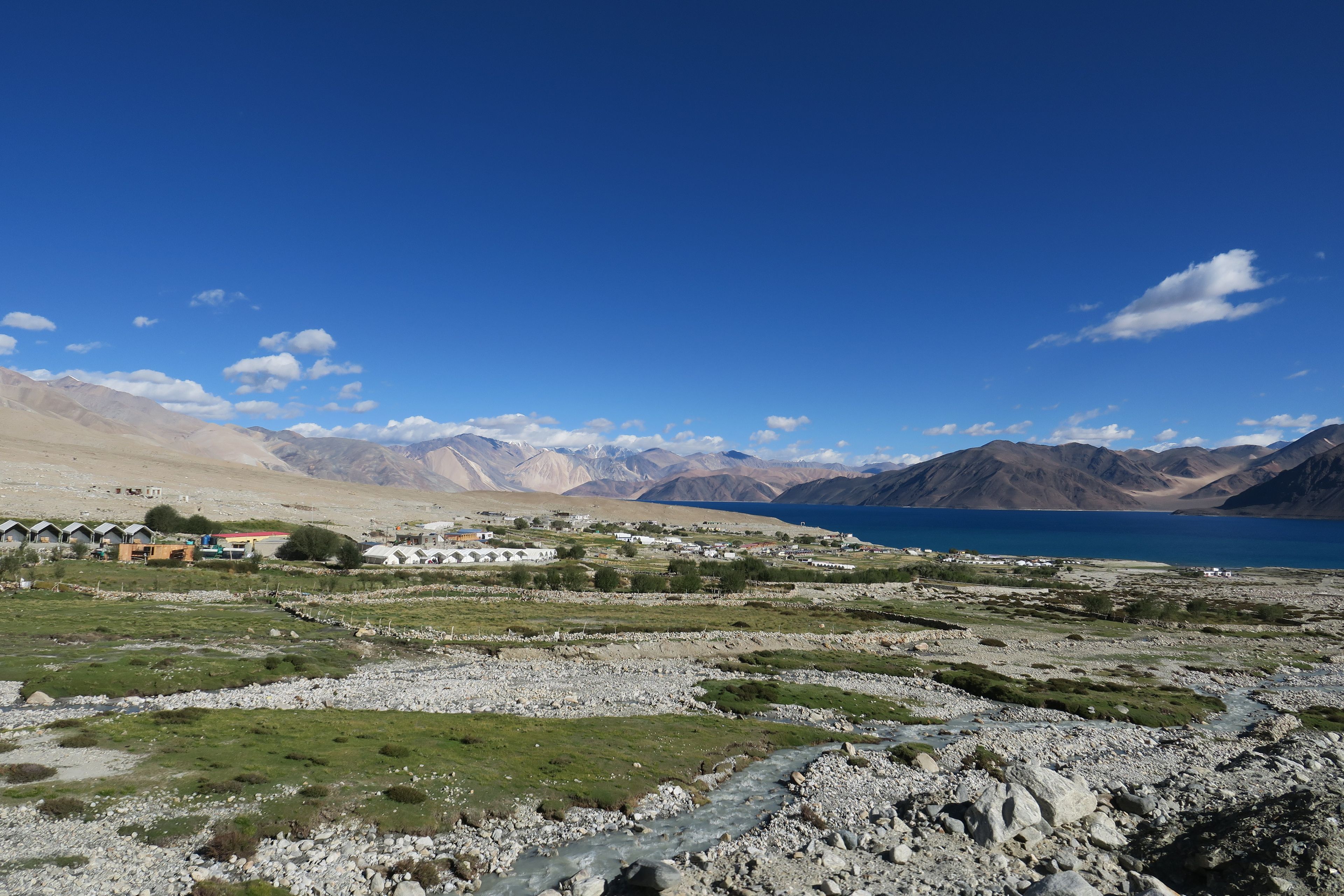
At camps in Nubra, Pangong and Tso Moriri, meals are simple: rice, dal, vegetables, rotis, soup, eggs and sometimes meat. Breakfast is usually bread, eggs, porridge and tea. Dinner is often served early. Quality depends on the camp, and a better camp usually has better food. Roadside cafes and dhabas offer noodles, momos, parathas and tea. On long drives, stops are far apart, so carry snacks and water.
Vegetarian, vegan and dietary needs
Vegetarians eat well in Ladakh, as many dishes use vegetables, and Indian vegetarian food is widely available. Vegans can manage with advance notice, though dairy is common. Jain and gluten-free options are possible in Leh but harder elsewhere. Tell us in advance, and we will inform the camps. Carry your own supplies if your needs are strict.
Eating at altitude
At high altitude, appetite can drop and digestion slows. Eat small, regular meals rich in carbohydrates, such as rice, noodles, bread and potatoes. Avoid heavy, oily food in your first days. Drink plenty of water, and sip warm drinks. Avoid alcohol, which dehydrates you and can worsen altitude symptoms. Do not skip meals, even if you do not feel hungry.
Eating by region
In Leh, you can eat almost anything, from a bowl of thukpa in a family kitchen to wood-fired pizza on a rooftop. Reservations are sensible in July and August. In Nubra, camps and guesthouses serve home-style meals, often with vegetables grown in the valley, and apricots in season. Turtuk has Balti dishes and flatbreads that differ from Ladakhi food. At Pangong, meals are plain and served at fixed times, and hot tea is a lifeline. At Tso Moriri, expect similar camp meals. On the western route, small cafes in Alchi and Lamayuru serve momos, noodles, tea and simple thalis.
A day of eating in Ladakh
A typical day might begin with khambir bread, eggs and butter tea, or a plain breakfast of toast, porridge and masala chai. Lunch on the road is a plate of rice, dal, vegetables and rotis in a roadside dhaba, or a bowl of thukpa if the weather is cold. In the afternoon, tea and biscuits or a slice of apricot cake in a bakery. Dinner is the main meal: a stew, momos, vegetables, dal and rice, with soup to start and tea to finish. If your appetite is weak, soup and plain carbohydrates such as rice, noodles and bread are the easiest choices, and you can add vegetables and protein as your appetite returns. Small, frequent portions work better than one heavy dinner.
Water and hygiene
Drink bottled water from a reliable seal, boiled water or filtered water. Carry a reusable bottle and refill it where safe, to avoid plastic waste. Wash your hands before eating. Be cautious with raw salads and street food in your first days, until your stomach adjusts. Stomach upsets are common, and dehydration at altitude makes them worse.
Food and responsible travel
Water and fuel are precious in Ladakh. Do not waste food or water, and avoid single-use plastic bottles where you can. Eat at local restaurants and homestays to support the community. Ask before taking photographs of kitchens or people cooking.
What to bring
Carry dry fruit, nuts, energy bars, glucose, electrolyte sachets and any special food you need. A flask for hot water is useful in cold camps. Keep snacks for the passes and lakes.
Plan with us
Tell us about dietary needs when you send your dates, and we will plan camps and meals accordingly. Read our altitude and safety guide for more on staying well, or see our Ladakh tour packages.
Practical tips
- Eat light, frequent meals in your first days, and avoid heavy, oily food and alcohol.
- Drink bottled, boiled or filtered water, and carry a refillable bottle.
- Carry snacks, such as nuts, dry fruit, biscuits and chocolate, for long drives.
- Tell camps about dietary needs in advance, since options are limited.
- Try a local meal in a family-run restaurant or homestay.