On this page 10 sections
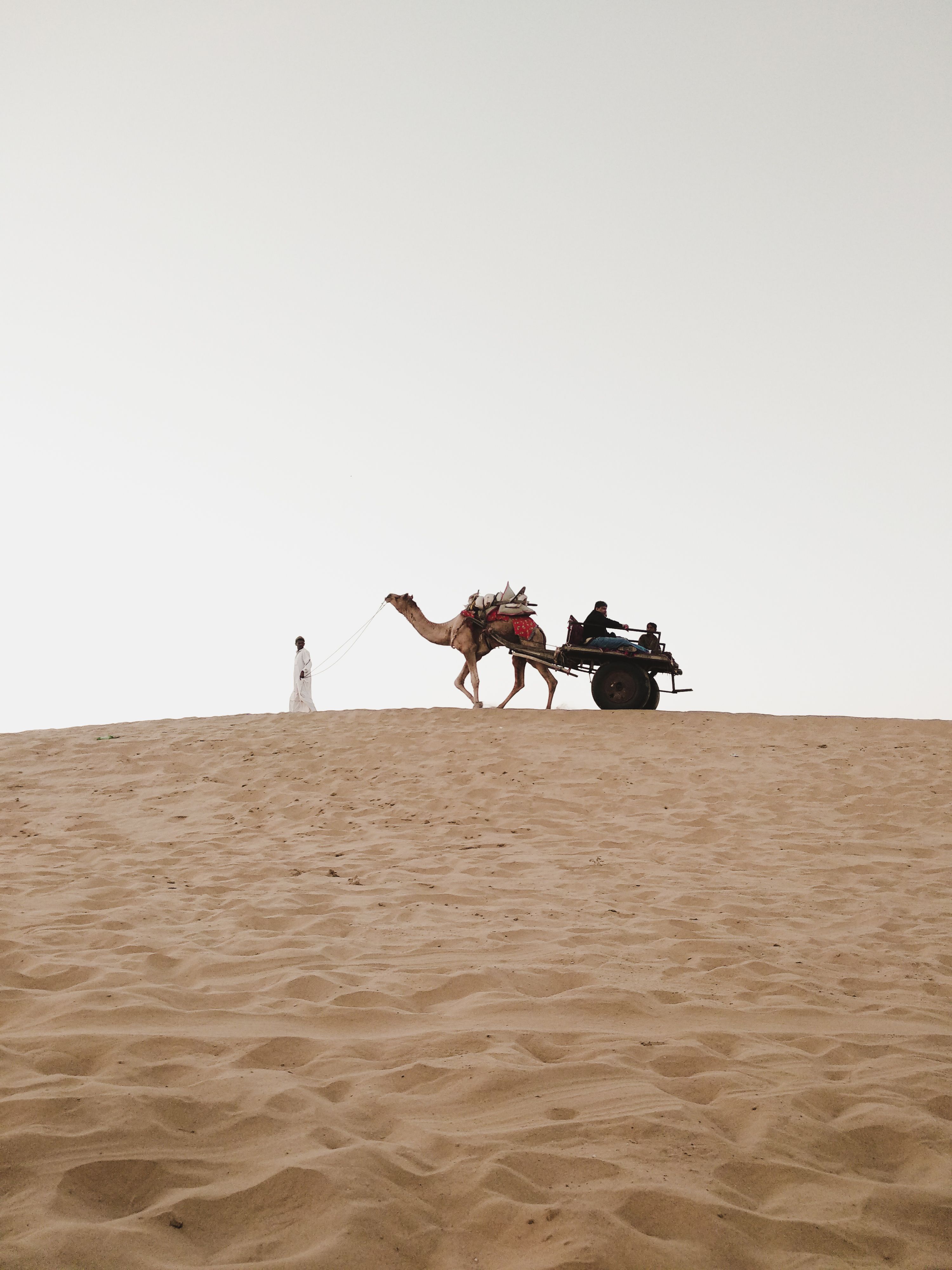
Jaisalmer sits near the western edge of India, where Rajasthan thins into dunes and the horizon turns pale gold. It is the most remote of the main tourist cities, and the effort of getting there is part of the pleasure. The fort rises like a sandcastle from the plain, the old town is a maze of yellow sandstone havelis and the desert beyond offers a night under stars.
What makes Jaisalmer special
Jaisalmer was founded in 1156 by Rawal Jaisal and grew rich as a stop on the caravan routes between India and Central Asia. Its merchants built elaborate havelis with carved sandstone facades, and the fort became a fortified town. Today, the fort is one of the few "living forts" in India, with homes, shops, guesthouses and temples still inside its walls, though this has strained its drainage and foundations.
What to see
Jaisalmer Fort is the main attraction, with a palace museum, Jain temples and rooftop views. Patwon Ki Haveli is a cluster of five elaborately carved merchant houses. Nathmal Ki Haveli and Salim Singh Ki Haveli are also worth seeing. Gadisar Lake is a quiet reservoir with temples and ghats. Bada Bagh has royal cenotaphs that glow at sunset. Kuldhara is an abandoned village with ruined houses. Sam Sand Dunes and Khuri are the usual desert camp destinations.
Desert experiences
- Camel safari. From a short sunset ride to multi-day treks. Choose operators who treat their animals well.
- Desert camps. Overnight stays in tents or huts, with dinner, folk music and a night sky. Quality varies widely.
- Jeep safari. A quicker way to cover the dunes and nearby villages.
- Folk performances. Rajasthani music and dance are part of most camp evenings.
How many days
Two nights is ideal: one in town and one in a camp, or two in town with a day trip. A single night is possible but rushed, given the distance from Jodhpur (about five hours by road) and the need for a sunset at the dunes.
Where to stay
Havelis and guesthouses inside or near the fort give atmosphere, but the fort's infrastructure is under pressure, so many travellers now prefer hotels outside the walls. Desert camps near Sam, Khuri and Mohangarh offer a night in the dunes. Choose camps with reasonable facilities and a clear policy against motorised dune bashing, which damages the habitat.
Responsible travel
Jaisalmer's water supply is limited, and its fort is fragile. Use water sparingly, choose accommodation that treats waste responsibly and avoid using motor vehicles on dunes. Respect local customs, and ask before photographing people. Buy crafts from local artisans, and be wary of "free" gifts that lead to pressure to buy.
A suggested day in Jaisalmer
Start early with the fort when the stone is soft gold and the lanes are quiet. Take a late breakfast, then visit Patwon Ki Haveli and Nathmal Ki Haveli before the heat. After lunch and a rest, head to Gadisar Lake and Bada Bagh for late-afternoon light, or drive to Sam for sunset. On the way back, stop to see Kuldhara if you have time. It is a day of walking and looking, with the best moments at the edges of the day.
Best time to go
October to March is ideal, with cool days and cold nights. Winter nights can drop to near freezing in the desert, so pack warm clothing. Summers are extremely hot. The Desert Festival in February brings music, turban-tying contests and camel events.
Getting there
Jaisalmer has a railway station and a small airport with limited flights. Most travellers come by road from Jodhpur, or by train. The Thar region has fewer services, so book early.
Plan with us
Jaisalmer is a highlight of our Royal Rajasthan circuit and the Desert and forts plan. Tell us your dates and we will arrange camps and transfers.