On this page 10 sections
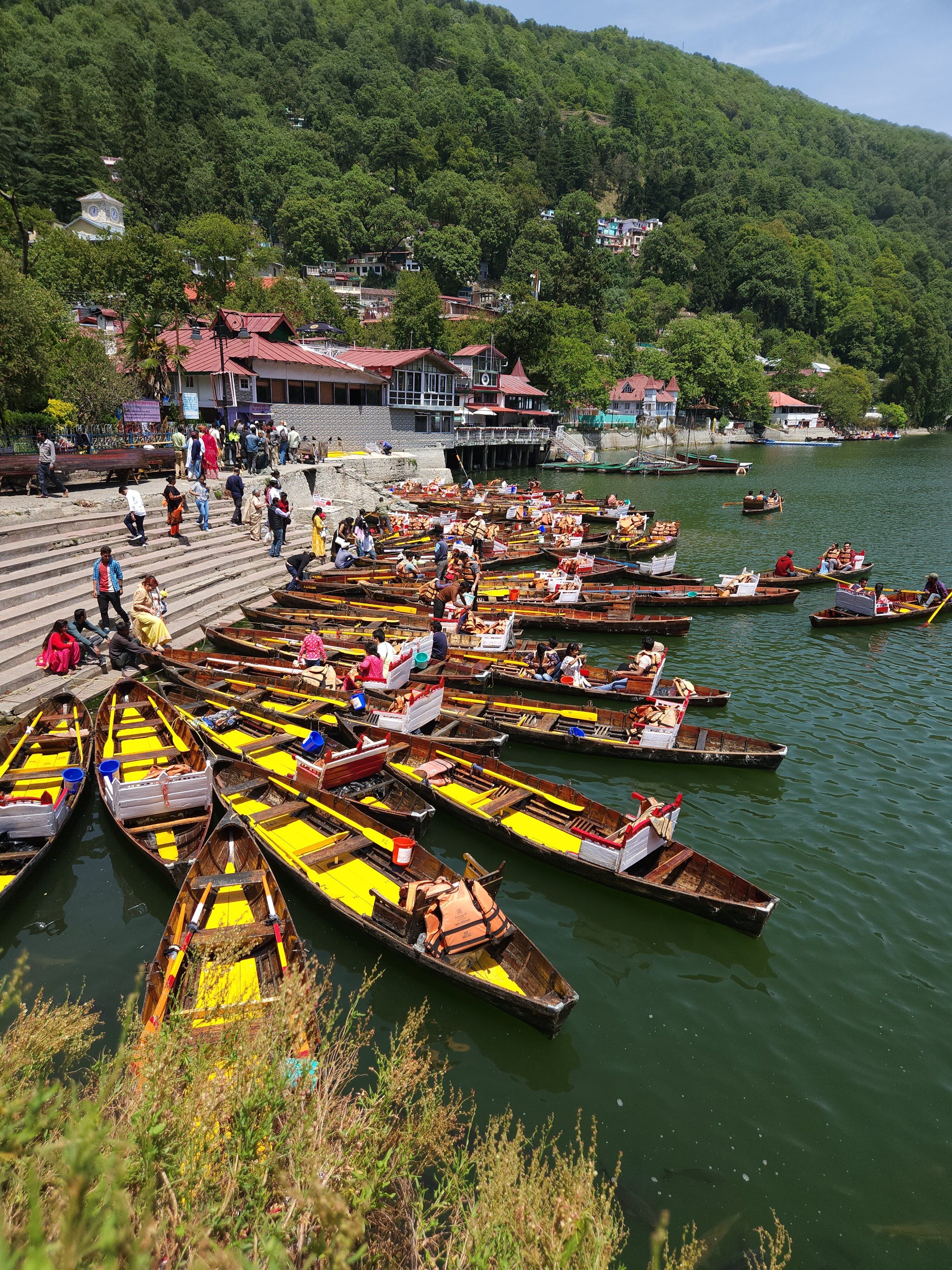
Nainital is built around a lake. At about 2,000 metres in the Kumaon hills, the town curves around the water, with pine and oak-covered hills rising on all sides. The lake is shaped, according to legend, like an eye, and the name itself comes from the goddess Naina Devi. In the colonial period, it became a summer retreat, and it remains one of the most popular hill stations in north India.
What Nainital is like
Mallital, at the northern end of the lake, and Tallital, at the south, are linked by Mall Road, which runs along the water. Boats of many kinds float on the lake. Shops, restaurants and hotels crowd the streets, and the town is busy, particularly in summer. Early mornings and evenings show a quieter, more attractive side, when mist hangs on the water and the hills turn gold.
What to do
- Naini Lake for boating, a lakeside walk and sunset views.
- Naina Devi Temple, at the northern shore, one of the Shakti Peeth shrines according to tradition.
- Snow View Point, reached by cable car or on foot, with views of Himalayan peaks on clear days.
- Tiffin Top (Dorothy's Seat), a short trek to a viewpoint.
- Eco Cave Gardens, a series of caves and walkways, popular with children.
- Kainchi Dham, an ashram associated with Neem Karoli Baba, about 17 km away, with big crowds on weekends and at annual events in June.
- Bhimtal, Sattal and Naukuchiatal, smaller lakes 20 to 30 km away, quieter than Nainital.
- Zoo and Hanuman Garhi, for families and sunset views.
How many days
Two nights allow the lake, the cable car and one day trip. Three nights suit a slower stay or a trip to Bhimtal and Sattal. Nainital pairs well with Jim Corbett, about 65 km away, in our Nainital and Corbett group tour and the honeymoon plan.
Crowds, traffic and parking
Nainital is one of the most crowded hill stations on weekends and holidays. Roads are narrow, parking is limited, and local authorities have at times restricted vehicle entry when parking is full. Expect delays. Midweek visits, early arrivals and staying at the quieter end of the lake, or in nearby Bhimtal, make a big difference. If you drive, ask your hotel about parking in advance.
Where to stay
- Lake-view hotels: pleasant but pricey, and busy.
- Hotels on Mall Road: convenient for food and shops but noisy.
- Hotels away from the lake: quieter, with views, but a walk or short drive from the centre.
- Bhimtal, Sattal and Mukteshwar: calmer alternatives, with homestays and resorts.
Weather and snow
Summer is pleasant, while the monsoon brings heavy rain and landslides. Autumn has clear skies. Winter is cold, with occasional light snowfall in the higher parts, and the lake can steam on cold mornings. Weekends are busy at any time of year.
Food
Nainital offers North Indian, Tibetan and Chinese restaurants. Try bal mithai and singori sweets, local pakoras and hot chocolate at old cafes. Kumaoni dishes such as bhatt ki churkani and aloo ke gutke are served in some restaurants.
Getting there
Kathgodam, about 35 km away, is the nearest railhead, and Pantnagar airport is about 70 km away. Delhi is about seven to eight hours by road. The final climb is steep and winding, so take motion-sickness tablets if needed.
Responsible travel
The lake faces pressure from tourism and pollution. Use bins, avoid plastic, and refrain from littering on the Mall. Choose boatmen who follow safety rules, and support local businesses. Respect temple customs and avoid loud behaviour.
Plan Nainital with us
We help you avoid the worst of the crowds and choose the right area to stay. Send your dates for a tailored plan.