On this page 9 sections
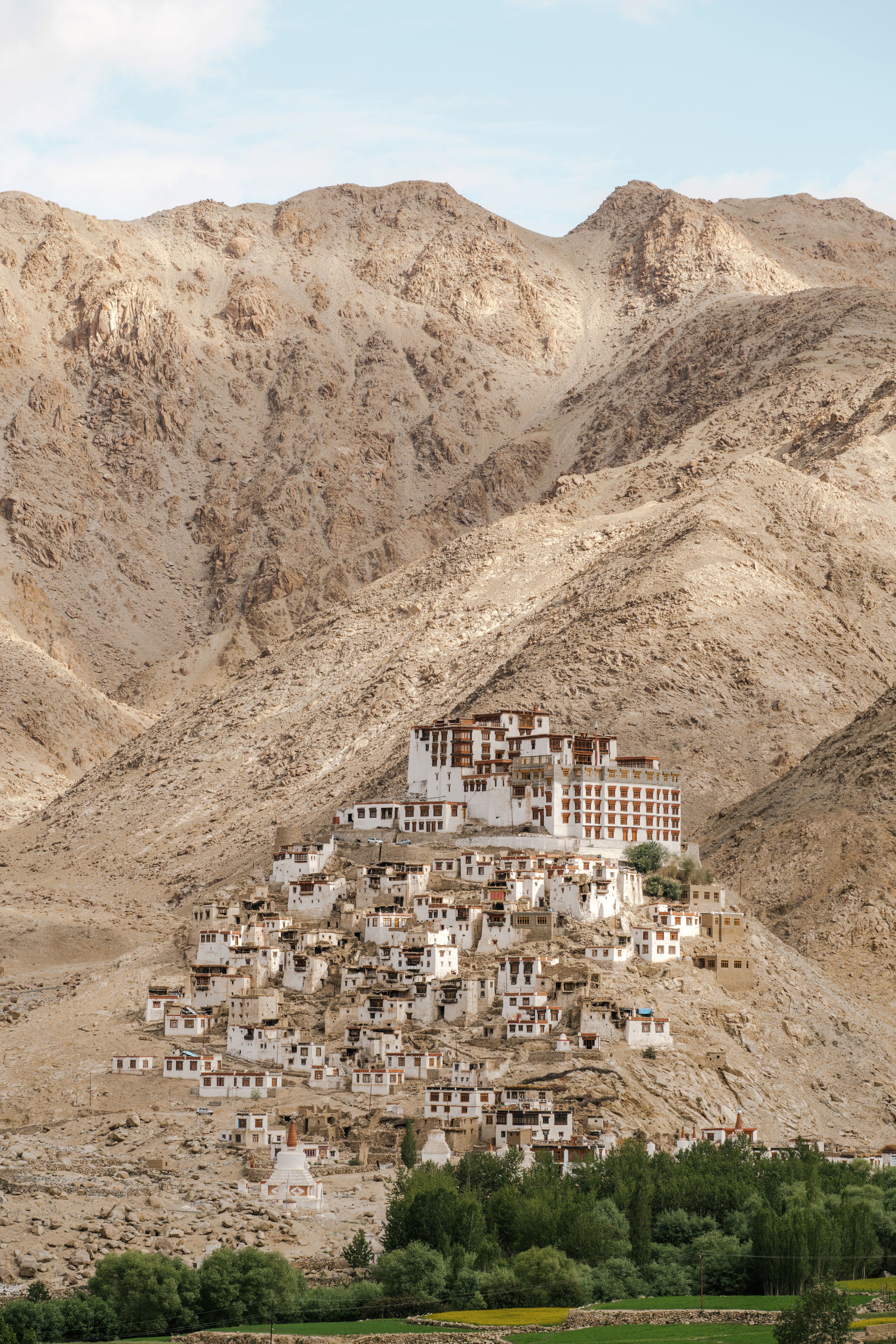
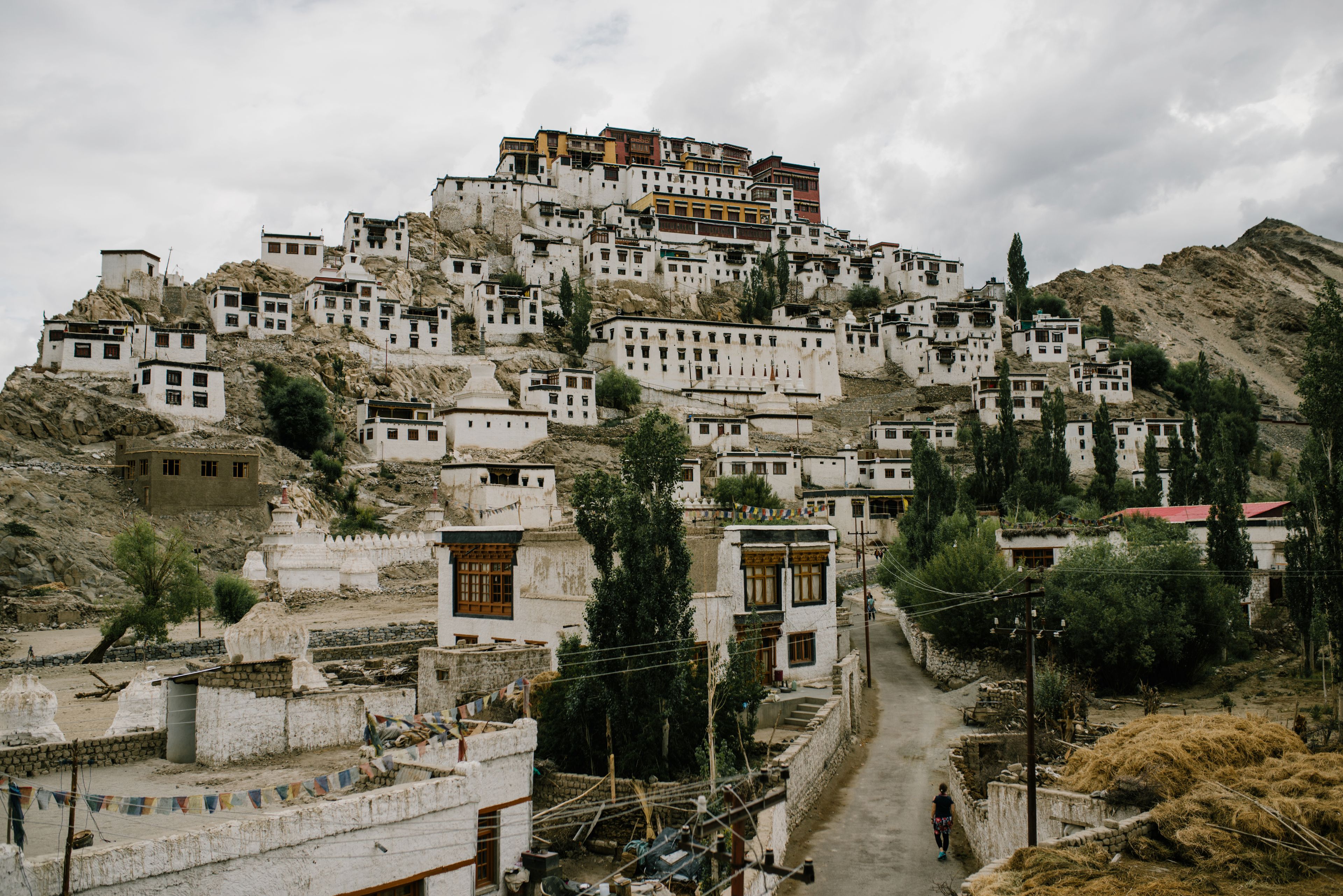
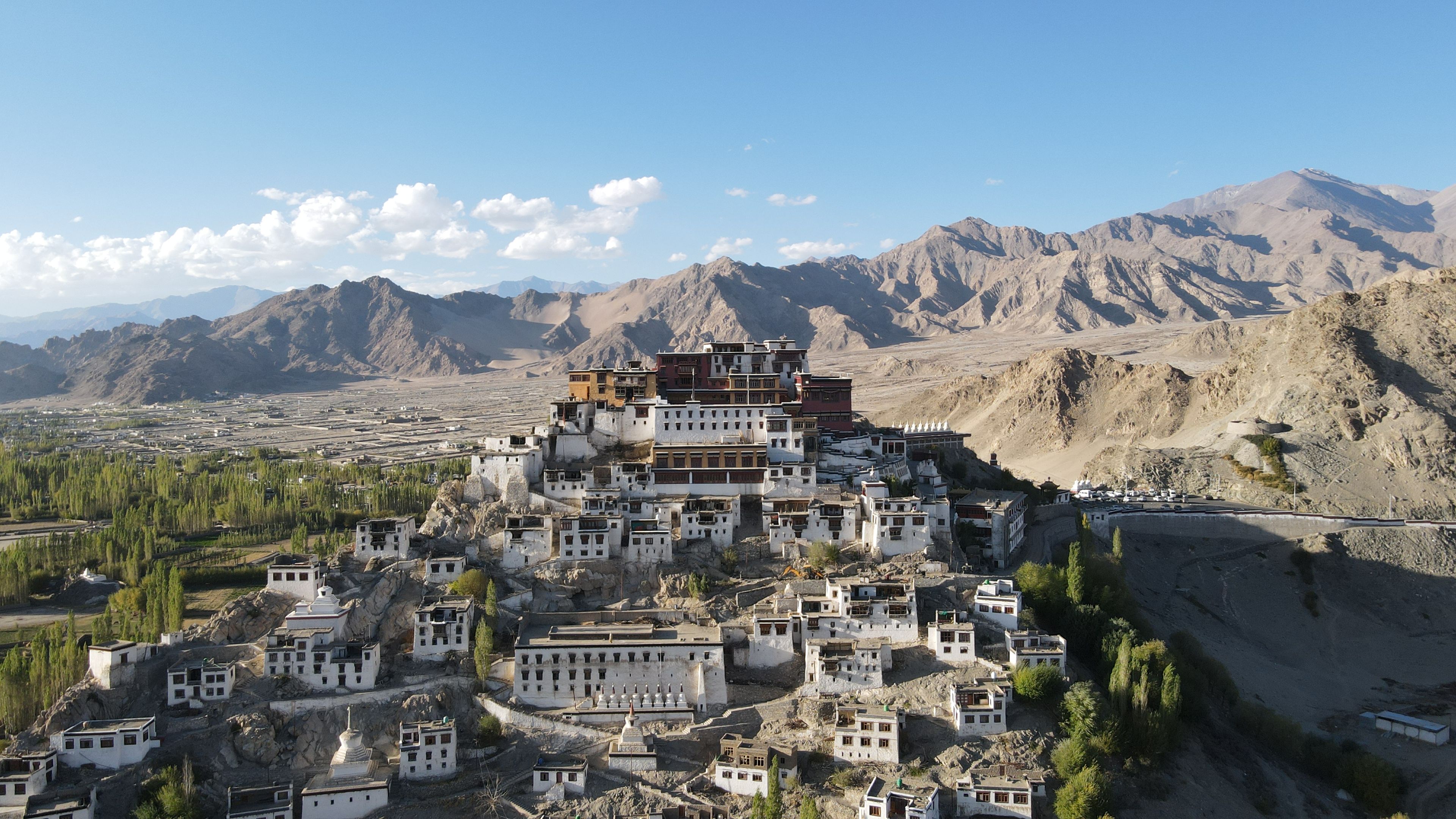
Thiksey Monastery is the picture most people carry of Ladakh: a white-and-ochre cluster of buildings stacked up the side of a hill, with the Indus valley spread out below. It sits about 19 km from Leh, at roughly 3,600 metres, and is the largest gompa in central Ladakh. It is also a living monastery with around a hundred monks, and one of the best places to feel the rhythm of Tibetan Buddhist life.
What you will see
The complex rises in twelve storeys, with courtyards, prayer halls, residential quarters and temples. The highlight is the Maitreya Temple, built in the 1970s, containing a statue of the Buddha of the future that is about 15 metres tall, one of the largest in Ladakh. Other halls display statues, thangkas, masks and ritual objects. The roof offers sweeping views.
Morning prayers
The most memorable experience is the morning puja, held in the main assembly hall early in the day. Monks chant, play horns and drums, and drink butter tea. Visitors are usually allowed to sit at the back, quietly. It is a living ritual, not a performance, so behave accordingly: do not use flash, talk or move around.
Etiquette
- Dress modestly, covering shoulders and knees.
- Remove shoes before entering halls.
- Speak softly, and silence your phone.
- Walk clockwise around prayer wheels and stupas.
- Ask before photographing monks or interiors.
- Do not touch statues, murals or ritual items.
- Leave a donation if you wish.
Altitude and the climb
The monastery is built on a hillside, and visiting involves stairs and slopes. At this altitude, they are tiring. Take it slowly, and rest as needed. On your first day in Leh, avoid long climbs. A visit on day two or three is more comfortable.
Getting there
Thiksey is about 30 minutes by road from Leh. Taxis are available, and many tours combine it with Shey Palace and Hemis. Buses run to the village, but timings are limited.
Best time to visit
Early morning for the prayers and soft light. Summer is the main season. The monastery hosts festivals, including the Thiksey Gustor in autumn, with masked dances. In winter, it is cold and quiet.
Practical tips
- Start early to catch the prayers.
- Wear layers and sturdy shoes.
- Carry water and a snack.
- Bring a small torch for dark corners.
- Be respectful of photography rules.
- Allow about two hours.
Who it suits
Culture lovers, photographers and anyone interested in Buddhism. The stairs may be hard for those with mobility problems, though the lower courtyards can be enjoyed.
Combine it with
Pair Thiksey with Shey Palace and Hemis on a half-day or full-day outing. See the Leh guide and the 6-day itinerary, or ask us for a plan.