Short answer
A Ladakh trip's cost depends mainly on flights, the number of days, taxi charges, the quality of camps and hotels, and the season. Local taxis are priced under union rates and make up a large share of the cost. July and August are the most expensive, and a longer, slower plan costs more but is safer and more enjoyable.
On this page 11 sections
"How much does a Ladakh trip cost?" is one of the most common questions we get. The honest answer is that it depends on choices you make: the season, the number of days, the route and the camps. This guide explains what moves the price and how to compare quotes. It is a planning guide, not a price list; real rates change with season and availability, and we confirm them in a written quote.
What drives the cost
Flights. Most travellers fly to Leh, and fares rise sharply in July and August. They are often the largest single cost, and booking early makes a big difference. A road journey can reduce airfare but adds days and risk.
Local taxis. Taxi services in Ladakh run under local union systems, with fixed rate lists for each route. Outside vehicles are generally not allowed to do local sightseeing. This keeps rates standard but means transport is a significant part of the total. Longer routes and more days mean higher cost.
Number of days. More days cost more, but a longer plan is usually better: it gives you rest days for altitude, buffers for road closures and a more relaxed pace. A short trip squeezed into five days often ends up costing more in stress.
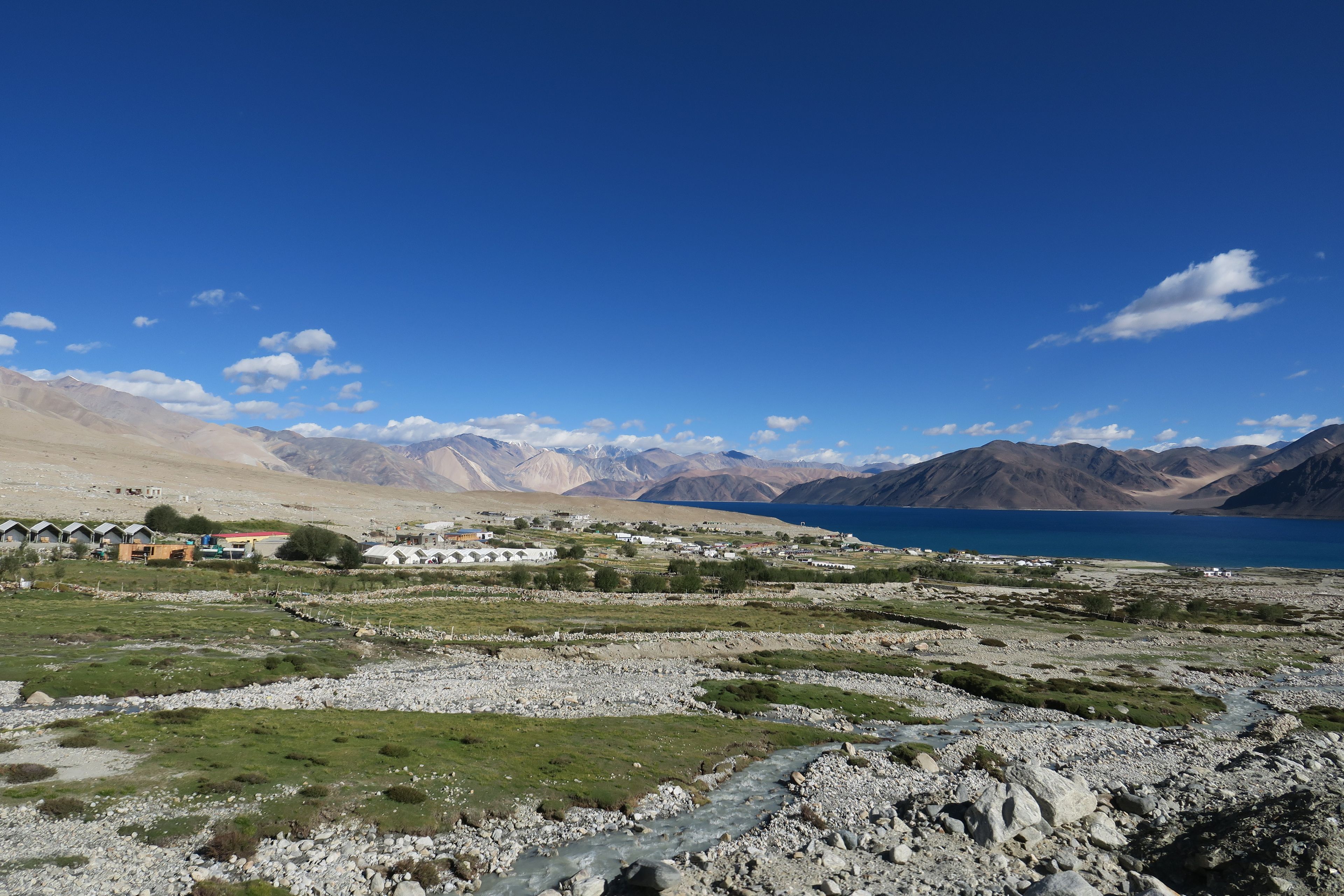
Camps and hotels. Leh has a wide range, from guesthouses to luxury properties. In Nubra and Pangong, camps range from basic tents to well-appointed cottages. Better camps cost more, but are generally worth the difference at the lakes, where a poor camp can spoil the night.
Season. July and August are the most expensive and the busiest. June and September are slightly cheaper. May and October carry lower prices but more uncertainty.
Group size. Vehicles can be shared across a group, so per-person transport cost falls with group size. Camp prices are often per person.
Costs paid separately
- Registration and environment fees, and any area permits, if not included.
- Monastery, museum and wildlife entry tickets.
- Oxygen cylinders and medicines.
- Lunch, snacks and drinks, unless listed.
- Optional activities, such as camel rides, rafting, mountain biking or stargazing sessions.
- Tips, for drivers and staff.
- Extra nights caused by weather or road closures.
What often goes wrong with budget quotes
- Too few days in Leh. A cheap plan that sends you to Pangong on day two is a health risk.
- Unclear camp quality. "Camp" can mean anything from a proper cottage to a shared tent with a pit toilet.
- Hidden extras. Fees, taxes and meals not listed.
- No buffer. A plan with no spare day cannot absorb a closed pass.
- Unrealistic driving times. Routes that look short on a map can take twice as long on mountain roads.
A way to compare quotes
Ask each operator the same questions: how many nights in Leh before going high? Which camps, and what kind of bathroom? What is included in meals? Which fees are included? What happens if a road closes? Is there a spare day? The lowest quote is rarely the best. A fair price from a team that answers these questions clearly is usually better value.
Where you can sensibly save
- Travel in June or September rather than July and August.
- Choose a mid-range hotel in Leh, and keep money for a better camp at Pangong.
- Travel in a group to share vehicles.
- Book flights early.
- Skip optional extras you will not use.
Where you should not save
- Acclimatisation days.
- A driver who knows the roads.
- Warm clothing and basic medicines.
- Travel insurance that covers altitude and evacuation.
- A buffer day at the end.
How a quote is built
A typical Ladakh quote has several layers. The first is accommodation, counted in nights and categories. The second is transport, which includes the vehicle, driver, fuel and the union-regulated charges for each route. The third is meals, which are usually breakfast and dinner at camps. The fourth is fees and paperwork, such as registration and environment fees. The fifth is the operator's margin and coordination. Ask which layers are included in the number you are given, and ask for each in writing. A quote that is vague on transport or camp quality is likely to cost you more once you arrive.
Short trip or long trip
A short trip looks cheaper but is often not. Compressed itineraries have longer driving days, less rest and no buffer, and a single closed pass can force you to pay for extra nights anyway. A longer, slower plan costs more on paper but spreads the high-altitude nights, includes rest days and leaves a spare day, which is the best insurance you can buy in Ladakh. Many travellers tell us afterwards that they wish they had stayed longer, and few say they wished they had cut a rest day.
Questions to ask about price
- How many nights are in Leh at the beginning, and are those nights charged at the same rate as the camps?
- Are the taxi charges for the whole route included, including waiting time?
- Which fees and permits are included, and which will I pay locally?
- Who pays for an extra night if a road is closed?
- Is oxygen available on the vehicle, and is it charged?
Payment and cash
Carry cash for the lakes, villages and small shops, since ATMs and card machines are unreliable outside Leh. UPI can work in some places, but connectivity is limited. We confirm payment terms in the quote.
Plan with us
Read our first-time visitor guide before comparing packages. Then send us your dates, group size and budget range and we will draft options with a written breakdown, or browse our Ladakh tour packages.
Practical tips
- Compare packages by number of nights, camp names or categories, meals and inclusions, not only by headline price.
- Book flights early for July and August; they are often the largest and least flexible cost.
- Ask whether taxi charges, permits and fees are included, and who pays if a road closure adds a night.
- Do not cut acclimatisation days to save money; it is the most expensive saving if you fall ill.
- Carry enough cash for the lakes, where ATMs are not available.