On this page 7 sections
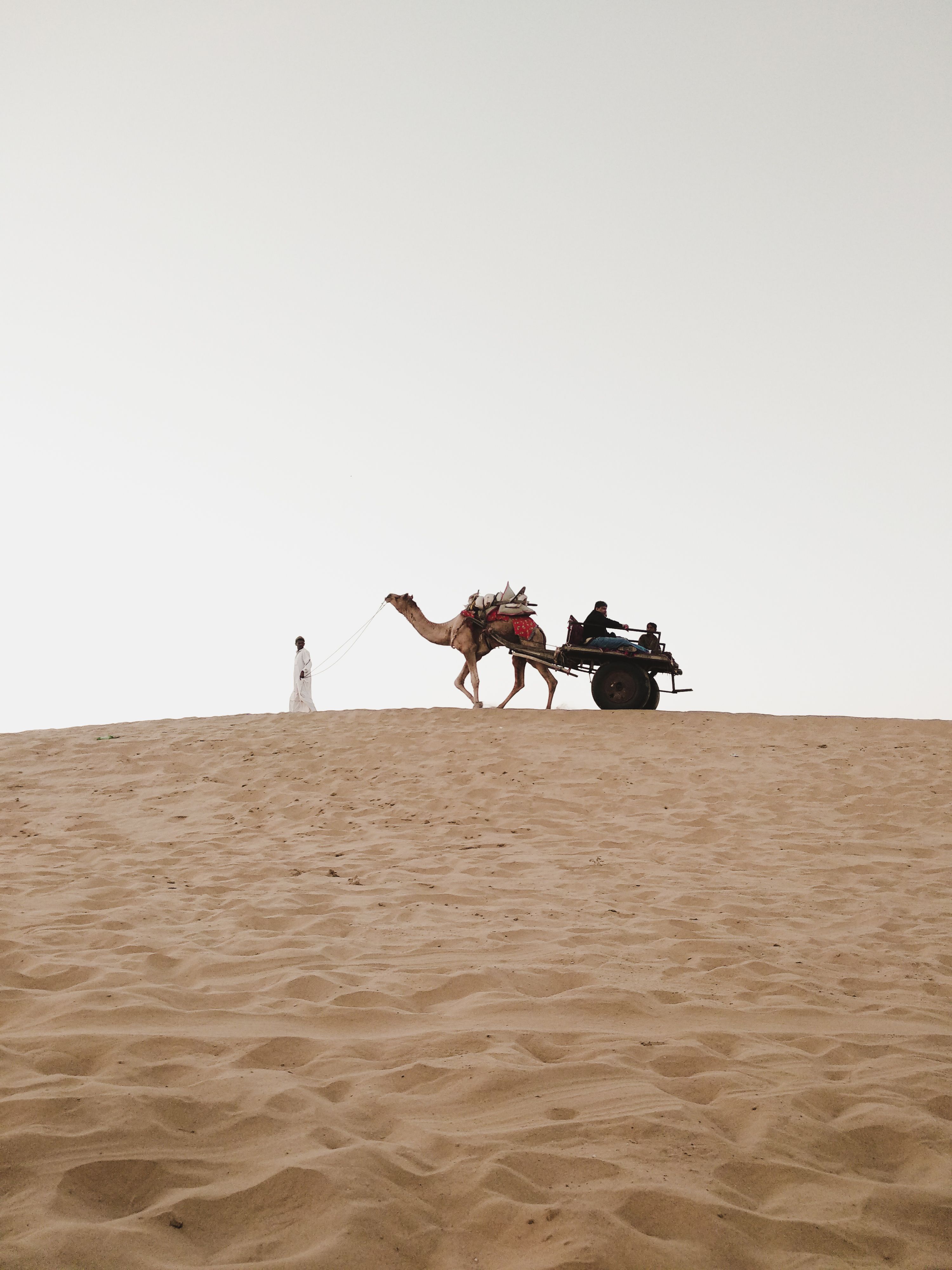
Sam Sand Dunes are the desert most visitors picture when they think of Rajasthan: rippled golden dunes, camels walking along the crest and a sky that turns orange at sunset. They lie about 40 km west of Jaisalmer, and a night in a camp nearby is one of the signature experiences of the state.
What to expect
The dunes are part of the Thar Desert, and the landscape is a mix of open sand, scrub and patches of low vegetation. The main viewing area near Sam village is the most developed, with camps, camel stations, jeep operators and music stages. Quieter dunes can be found further out, towards Khuri and beyond, where there are fewer people.
A typical visit includes:
- Arrival in the late afternoon. A drive from Jaisalmer, about an hour.
- A camel ride. Camels walk up and down the dunes, usually for an hour. You can ride at a gentle pace and stop for photographs.
- Sunset on the dune. The most popular moment, so expect a crowd.
- Evening in a camp. Folk music and dance, a Rajasthani dinner and a campfire.
- Night sky. On clear nights you will see more stars than almost anywhere else you are likely to be.
- Sunrise and breakfast. The next morning, a quiet walk on the sand and a return to Jaisalmer.
Choosing a camp
Camps vary widely in quality, from basic tents to luxury tents with attached bathrooms. Consider these points:
- Tent type and bathrooms. Ask whether bathrooms are attached, and whether there is hot water.
- Distance from the main dune area. Camps further from Sam tend to be quieter.
- Noise policy. Some camps run loud music late into the night.
- Winter warmth. Nights are cold, so check bedding and heating.
- Responsible practices. Avoid camps that promote motor-vehicle dune bashing or leave waste on the sand.
Camels and animal welfare
A good camel handler will look after the animal, give it rest and not overload it. Avoid rides where camels seem exhausted, thin or carry too much weight. Agree the ride length and price in advance. Let the camel set the pace, and do not pull on the nose rope.
Alcohol and etiquette
Alcohol may be served at some camps with licences, but rules vary, and drinking in public places is not allowed. Be respectful of the local community, and ask before photographing people. Dress in layers: it is hot in the afternoon and cold at night.
Practical tips
- Wear closed shoes you can empty of sand, plus sunglasses and a scarf for dust.
- Carry a torch, a power bank and a warm layer in winter.
- Bring cash for tips and small purchases.
- Arrive before sunset to find space on the dune.
- Prebook your camp; the best ones sell out in winter and festival weeks.
Is it suitable for children and elders?
Yes, in most cases. Camel rides can be short, jeep rides are an alternative, and the camps have beds and meals. The terrain is soft, so walking is tiring. Sleeping in a tent can be uncomfortable for people with mobility or health issues, so consider a hotel in Jaisalmer and a sunset visit.
Plan it with us
Sam Sand Dunes feature in the Royal Rajasthan circuit and the Desert and forts plan. See the Jaisalmer guide or ask for a custom plan.