On this page 7 sections
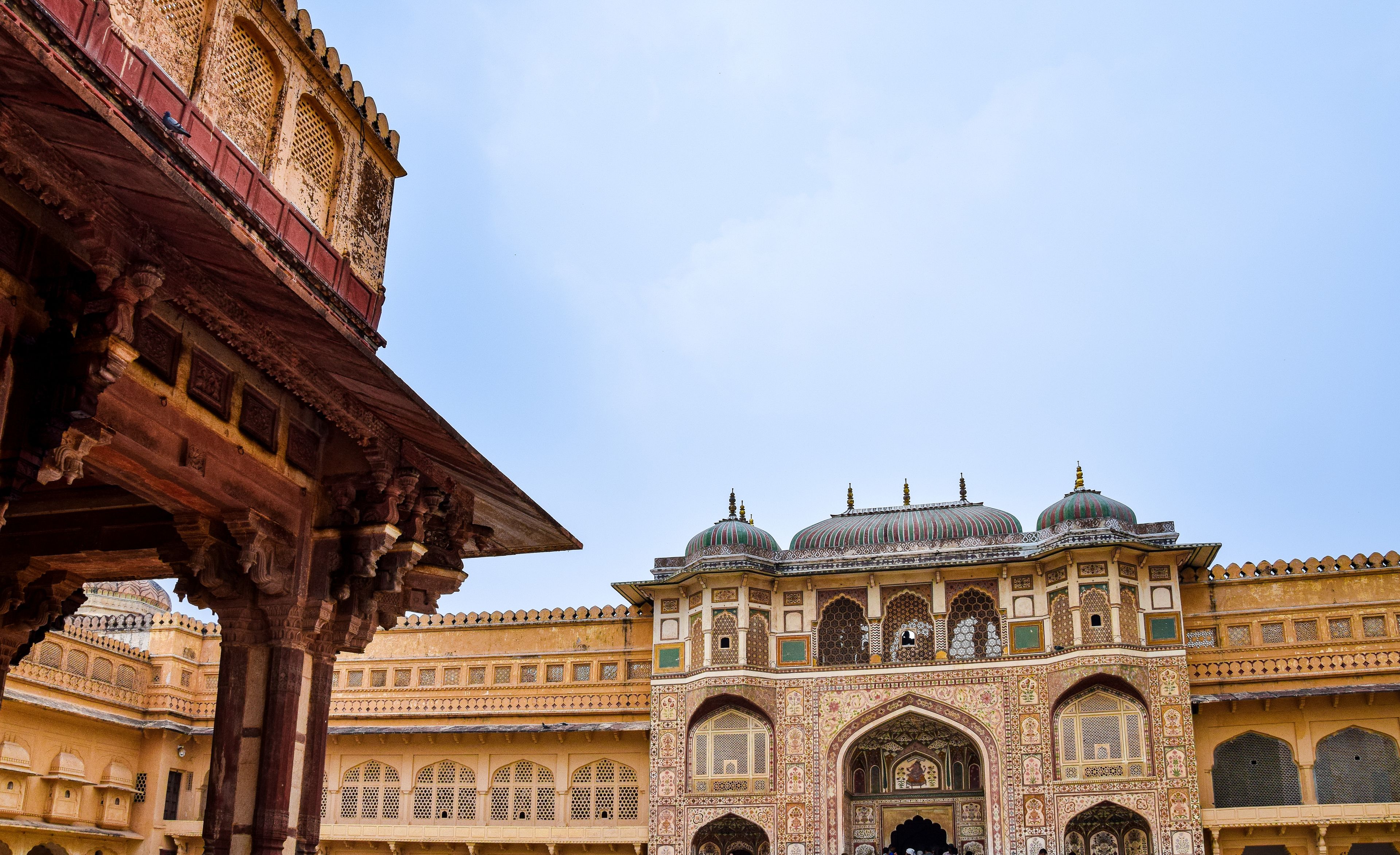
Amer Fort is the best single reason to spend a day in Jaipur. It sits on a ridge of the Aravallis above Maota Lake, about 11 km from the city centre, a sprawl of terraces, gateways and palaces in red sandstone and white marble. It is part of the UNESCO listing for the Hill Forts of Rajasthan, and it looks as good in the early morning mist as it does in late-afternoon sun.
A short history
The fort was begun in 1592 by Raja Man Singh I, a general of Emperor Akbar, on the site of an earlier Kachwaha stronghold, and expanded by Jai Singh I in the following decades. It served as the Kachwaha capital until the move to Jaipur in 1727. The fort blends Rajput and Mughal styles, which is why it combines military bastions with delicate courtyards, painted gateways and screened balconies.
What to see inside
- Suraj Pol and Jaleb Chowk. You enter through the Sun Gate into a large parade courtyard.
- Ganesh Pol. A richly painted gateway that is one of the most photographed features.
- Diwan-i-Aam. The Hall of Public Audience, an open pillared hall with views over the lake.
- Sheesh Mahal. The Mirror Palace, a chamber covered in mirror inlay that sparkles even by candlelight.
- Sukh Niwas and the gardens. Cooled by channelled water, these were the summer retreat.
- Zenana quarters. The women's apartments, arranged around a central courtyard.
Allow about two to three hours inside. A guide is helpful for the stories, and licensed guides display ID.
How to reach the top
The ascent from the base is a short but steep climb. You have three common options:
- Walk up the ramp. About 10 to 15 minutes, easy for most people, and quiet in the morning.
- Take a jeep. Official jeeps run between the base and the fort at fixed fares.
- Ride an elephant. Elephant rides are operated under state regulation but are controversial. Welfare groups and an expert committee have raised concerns about the animals, and many travellers choose not to ride. We suggest walking or taking a jeep.
Visiting tips
- Arrive soon after opening, ideally before 9 am in winter, to avoid crowds and heat.
- Wear comfortable shoes; the stone is uneven and slippery in places.
- Carry water and a hat; shade is limited in the courtyards.
- Agree a guide's fee before you start, or use an audio guide.
- Beware of touts selling "special" tickets or photo services.
- The lighting at Sheesh Mahal can be dim, so be patient when taking photographs.
Nearby
Jaigarh Fort, the cannon foundry and Nahargarh Fort lie on the ridges above. The Anokhi Museum of Hand Printing in Amer village shows the block-printing craft, and Panna Meena Ka Kund is a small, photogenic stepwell nearby. Jal Mahal on the road back is a short photo stop.
Seasons
October to March is the best time. In summer the stone heats up and the climb is hard by midday. The monsoon turns the hills green and fills the lake, which looks beautiful but can make the ramps slippery.
Plan it with us
Amer Fort is a highlight of our Golden Triangle and Royal Rajasthan plans. See the Jaipur guide or tell us your dates.