On this page 10 sections
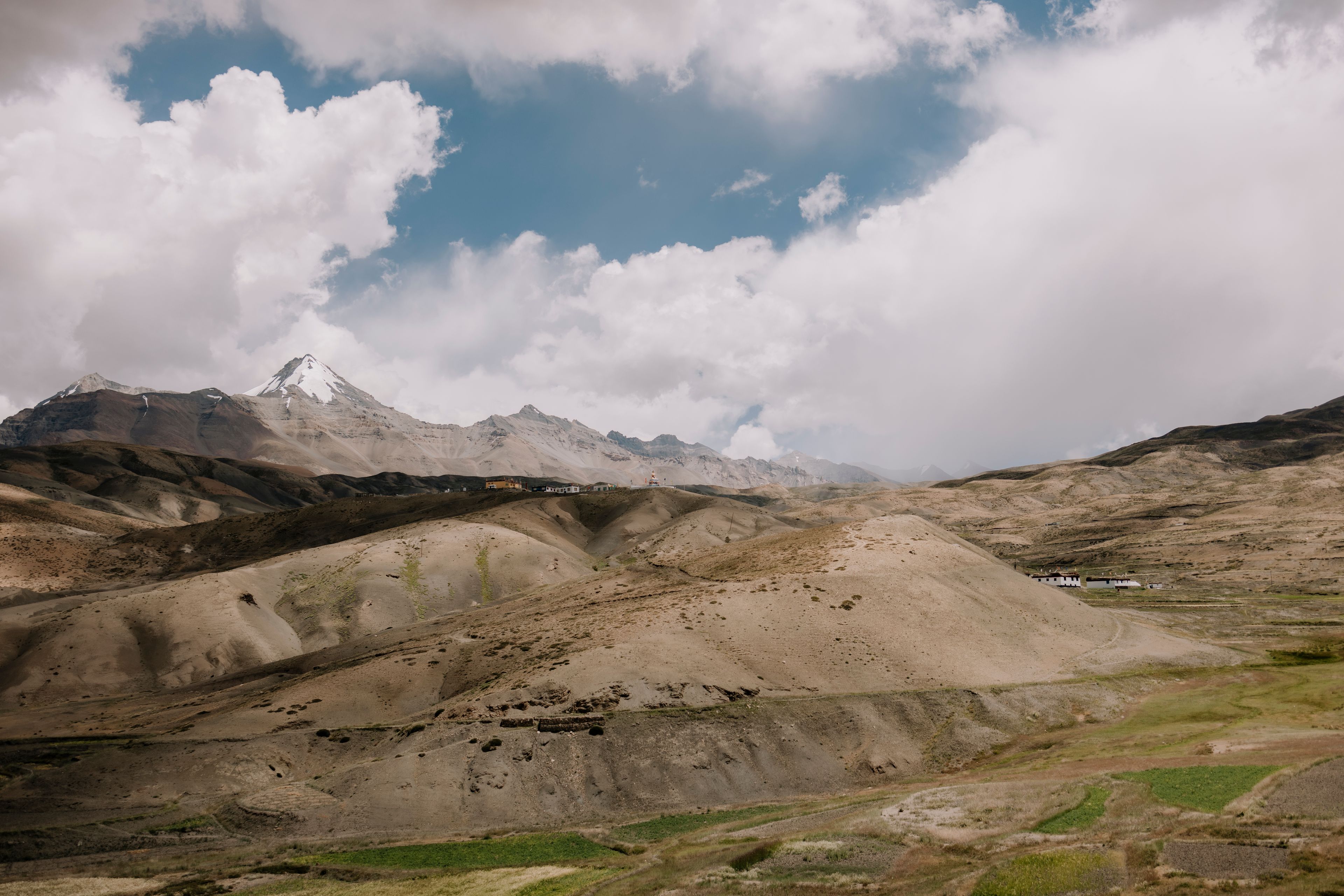
Spiti is a different Himachal. Lying in the rain shadow of the Himalaya, it is a high cold desert at about 3,800 metres, with bare mountains in shades of brown, red and grey, deep river gorges and a sky of intense blue. Monasteries cling to ridges, villages sit in pockets of green and the distances feel immense. It is a place for travellers who like space, silence and a bit of challenge.
What Spiti is like
The valley is small in population and large in scale. Its main town, Kaza, is a modest administrative centre. Beyond it, villages such as Kibber, Langza, Hikkim and Komic sit at 4,200 to 4,500 metres, among the highest inhabited places in the world. Facilities are simple: homestays, basic hotels, limited ATMs and patchy mobile coverage. The pace is slow, and the rewards are the landscape and the culture.
What to see
- Key Monastery, a fortress-like Buddhist monastery near Kaza.
- Kibber, Langza and Hikkim, high villages known for fossils, wide views and the highest post office claim.
- Dhankar Monastery and Lake, perched on a cliff above the confluence of two rivers.
- Tabo Monastery, more than a thousand years old, with well-preserved murals.
- Pin Valley National Park, home to ibex and, rarely, snow leopards in winter.
- Chandratal Lake, a high-altitude lake reached via Kunzum Pass in summer.
- Nako and Kalpa, in Kinnaur, for lakes, apple orchards and views of Kinner Kailash.
Routes and seasons
There are two ways into Spiti.
- Via Shimla and Kinnaur. This route follows the Sutlej valley and the Hindustan-Tibet road. It is generally open much of the year, though landslides can cause delays. It gives a gradual ascent, which helps acclimatisation.
- Via Manali and Kunzum Pass. This route crosses Rohtang or the Atal Tunnel, then Batal and Kunzum Pass at over 4,500 metres. It opens in summer, usually from late May or June to October, depending on snow.
Many travellers enter via Shimla and leave via Manali, which is a circuit of about seven to ten days. The full circuit is best from mid-June to early October. In winter, Spiti is cold and remote, accessible only from the Shimla side and best for experienced travellers.
Altitude
The biggest challenge in Spiti is the altitude. Kaza is at 3,800 metres, and passes go above 4,500 metres. Altitude sickness can affect anyone, regardless of fitness. Symptoms include headache, nausea, dizziness and breathlessness. Ascend gradually, spend a night at intermediate points such as Kalpa or Nako, drink water, avoid alcohol and rest on arrival. If symptoms worsen, descend. People with heart or lung conditions should consult a doctor before going. Our Himachal safety guide has more.
Permits and registration
Indian citizens do not need an inner line permit for the standard Spiti circuit. Some checkposts may ask you to register, and you should carry government ID. Foreign nationals need protected area permits. Rules can change, so we check before departure.
Practical issues
- Money. ATMs are scarce and sometimes out of order; carry cash.
- Fuel. Petrol is limited; fill up when you can.
- Connectivity. Mobile coverage is patchy; some operators work only in Kaza.
- Accommodation. Homestays and basic hotels; book ahead in peak season.
- Road conditions. Roads can be rough, narrow and subject to landslides or washouts.
- Weather. Cold nights, even in summer, and strong sun by day.
How many days
A minimum of seven days is needed for a proper circuit, with 8 to 10 days giving a more comfortable pace. Do not try to do Spiti in four days; you will spend the trip in a vehicle and risk altitude problems.
Who it suits
Fit, flexible travellers who love landscapes and are comfortable with simple facilities. It is not suitable for people with serious health conditions or for those who need predictable schedules. Families with children should consider carefully, and elders are generally advised to avoid it.
Responsible travel
Spiti's environment is fragile and water is scarce. Use water sparingly, avoid plastic, carry waste out and respect monasteries and village customs. Stay in homestays where you can, and pay fair prices.
Plan with us
Our Spiti Valley expedition is built for the summer season, with acclimatisation days and buffer time. Tell us your dates and we will advise on feasibility.